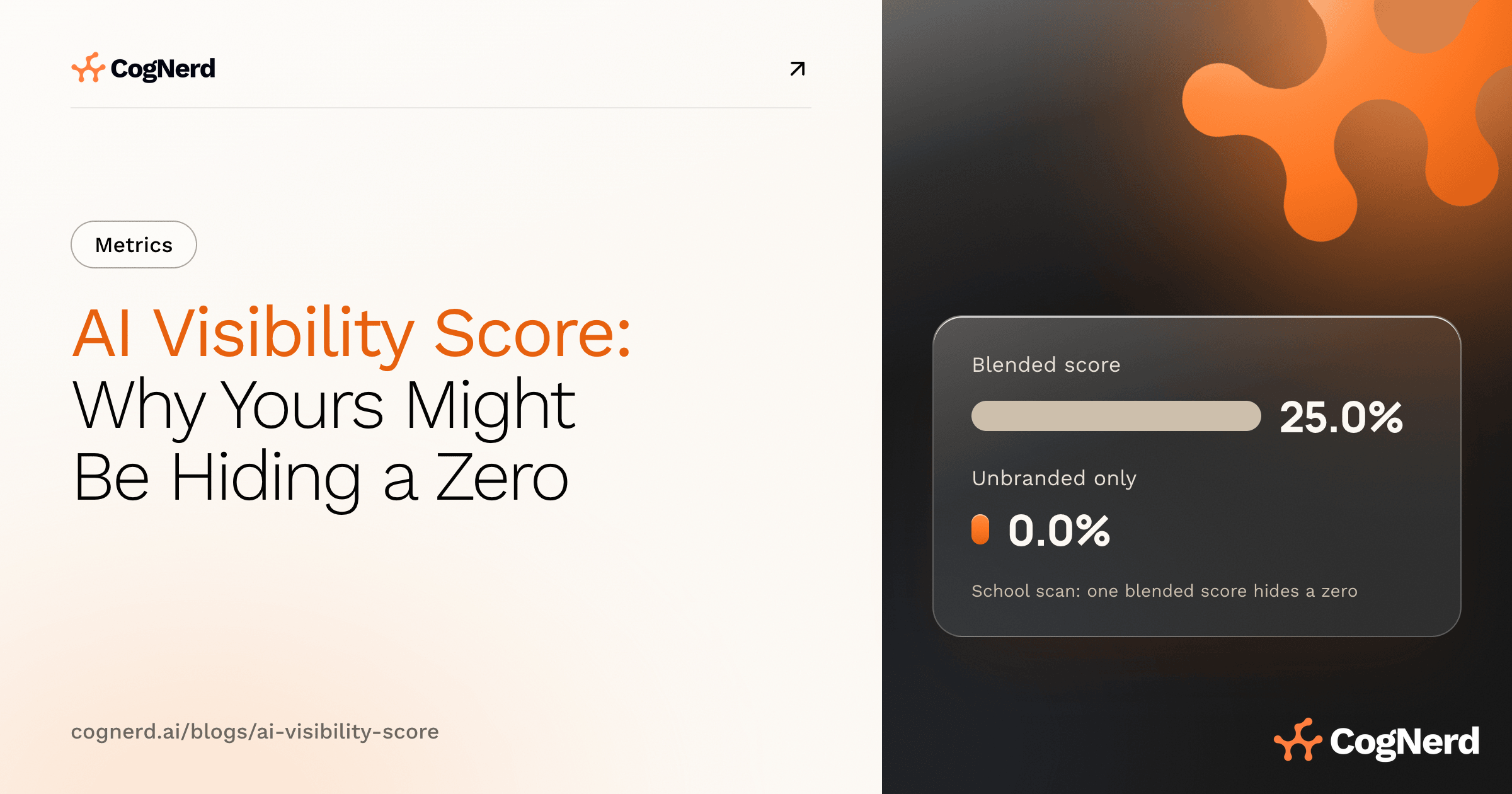
Your own unbranded mention rate: the share of AI answers to category questions, where the buyer has not named you, that mention your brand. Industry statistics show how large the shift to AI answers is. Only your own number, measured on a fixed question set every month, shows whether buyers meet you there.
Back to all blogs Last updated: 11.26.2026
What do the statistics say about generative engine optimization in 2026?
CN
By CogNerd Team20 generative engine optimization statistics, each checked at its source: who sees AI answers, how clicks fall, what gets cited and what lifts visibility.
Key Takeaways
- Reach: over 2.5 billion monthly AI Overviews users and over 1 billion for AI Mode (Google), and 1.2 billion weekly ChatGPT users.
- Clicks on regular results nearly halve with an AI summary (8% vs 15% of visits); 1% of visits click a link inside it.
- In the KDD 2024 GEO study, quotations, statistics, fluency fixes and cited sources raised visibility most; keyword stuffing lowered it.
Short answer: AI answers reach billions of people and take clicks with them. Google reports over 2.5 billion monthly users of AI Overviews, and Pew found people clicked a regular result in 8% of visits with an AI summary against 15% without. In lab tests, citing sources and adding statistics or quotations lifted a page's AI visibility by 27.5 to 40.9 percent.
Google counts over 2.5 billion monthly users of AI Overviews, yet in Pew's browsing data people clicked a link inside an AI summary in 1% of visits. Every number below was opened at its primary source on 19 Nov 2026; lab studies, single panels and small samples are flagged.
The newest source, the Reuters Institute's Generative AI and News Report 2026 (29 Oct 2026), is a YouGov survey of about 2,000 people in each of nine countries. 57% had seen or engaged with AI-generated answers in search engines such as Google and Bing in the last week, more common than active use of standalone AI tools, the report says. Only 20% had not seen AI anywhere (Reuters Institute, 29 Oct 2026).
How many people use AI Overviews, AI Mode and ChatGPT in 2026?
Google reported over 2.5 billion monthly AI Overviews users and over 1 billion for AI Mode on 19 May 2026; OpenAI put ChatGPT at 1.2 billion weekly users on 29 Sep 2026. Each company counts its own product, monthly or weekly, one search surface or a whole app.
| # Statistic (AI answer reach, 2025 to 2026) Figure Source and date |
| 1 | Monthly active users of Google AI Overviews | Over 2.5 billion | Google, I/O 2026 keynote post, 19 May 2026 |
| 2 | Monthly users of AI Overviews one year earlier | More than 1.5 billion | Think with Google, I/O 2025, citing Alphabet Q1 2025 earnings |
| 3 | Monthly active users of Google AI Mode | Over 1 billion, about a year after launch | Google, I/O 2026, 19 May 2026 |
| 4 | Monthly active users of the Gemini app | Over 900 million, up from 400 million a year earlier | Google, I/O 2026, 19 May 2026 |
| 5 | Weekly users of ChatGPT | 1.2 billion | OpenAI DevDay, 29 Sep 2026, as reported live by Engadget |
| 6 | Change in Google usage for queries that show AI Overviews, in the US and India | Over 10% increase | Think with Google, May 2025 (Google internal data, Sep 2024 to Apr 2025) |
Statistic 6 measures searching inside Google, not visits to your site. Our post on Google AI search usage has the history.
Do AI Overviews reduce clicks to websites?
Yes, in Pew Research Center's browsing data: 900 US adults, 68,879 Google searches, March 2025. They clicked a regular result in 8% of visits with an AI summary, against 15% without. Only 1% of visits included a click on a link inside the summary (Pew Research Center, 22 Jul 2025).
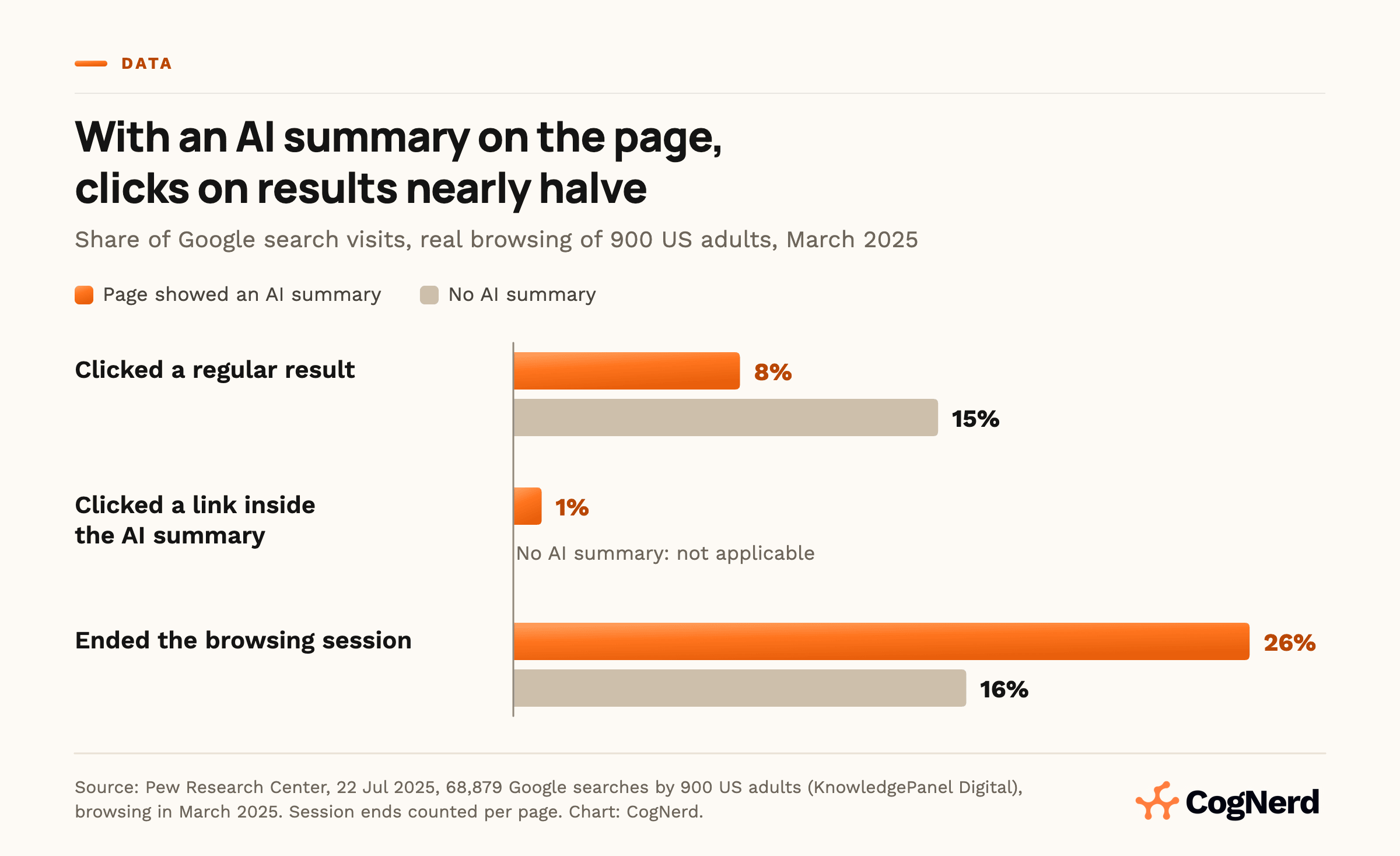
Figure 1. Source: Pew Research Center, 22 Jul 2025, 68,879 Google searches by 900 US adults, March 2025.
- 8% vs 15% of visits included a click on a regular result, with vs without an AI summary.
- 1% of visits to pages with a summary included a click on a link inside it.
- 26% vs 16% of pages ended the browsing session, with vs without a summary.
- About two-thirds of all searches ended without a click on a result (browsing elsewhere on Google or leaving).
Buyers who stop at the answer give their attention to the brands it names, so we track mentions inside answers. Our guide to how generative engine optimization works explains how engines pick names.
What percentage of Google searches show an AI Overview?
In Pew Research Center's March 2025 data, 18% of Google searches produced an AI summary, 12,593 of 68,879. Long, conversational searches triggered one most: 60% of searches starting with "who", "what", "when" or "why" did, against 8% of one- or two-word searches.
- 18% of searches produced an AI summary (12,593 of 68,879).
- 58% of respondents ran at least one such search in March 2025.
- 60% of searches starting with "who", "what", "when" or "why" produced one.
- 8% of one- or two-word searches did, against 53% of searches of ten words or more.
- 36% of full-sentence searches (a noun and a verb) did.
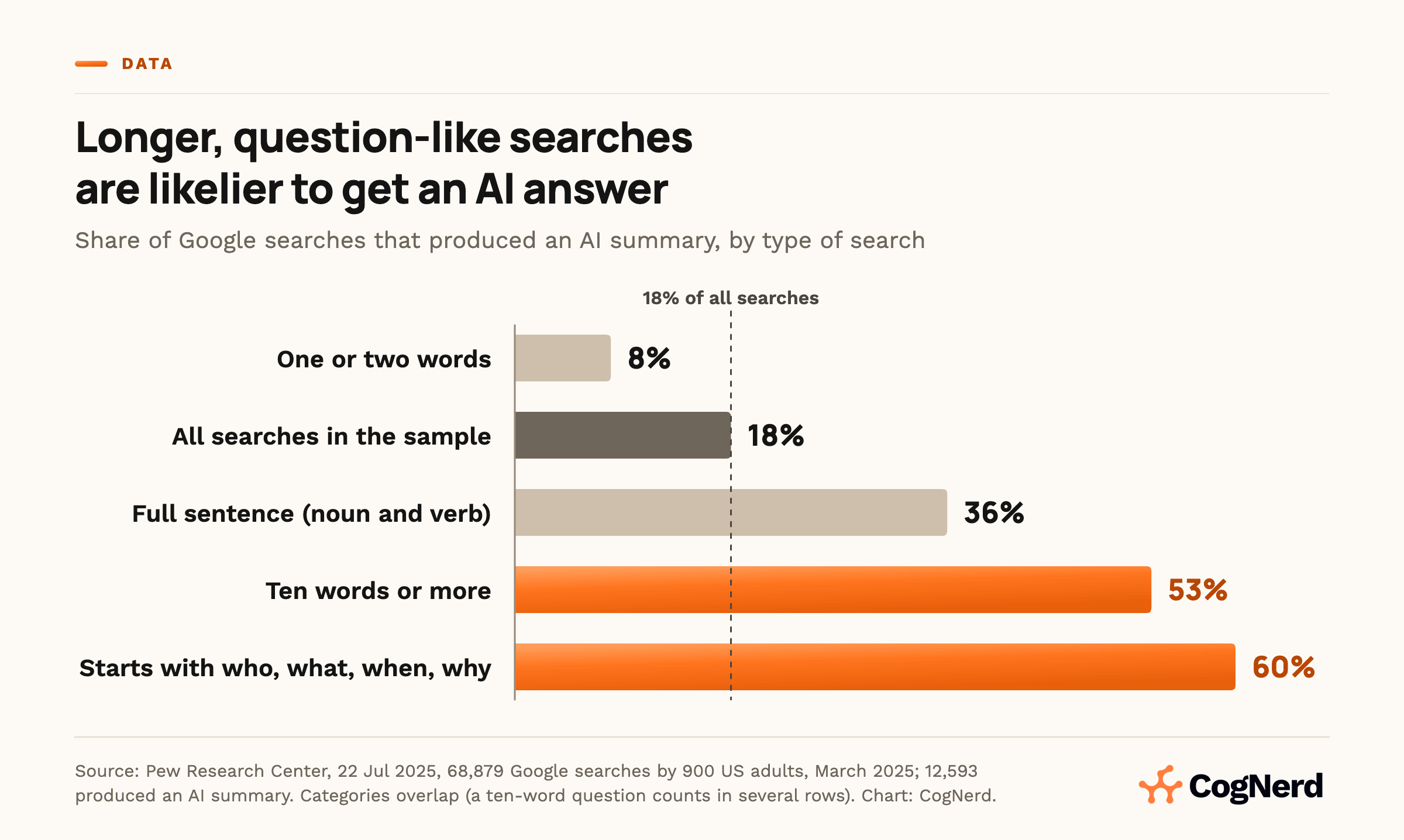
Figure 2. Source: Pew Research Center, 22 Jul 2025, March 2025 browsing. Categories overlap.
Buyers type long questions when they compare options: "which CRM works for a 20-person sales team", not "CRM". If your pages answer only the two-word version, the AI answer to the long one gets written from someone else's page. Which long questions does your site answer?
What sources does Google AI Overview use?
Google's AI summaries lean on a few shared platforms, per Pew Research Center: Wikipedia, YouTube and Reddit made up 15% of cited sources and government (.gov) sites 6%. 88% of summaries cited three or more sources, and the median summary ran 67 words (22 Jul 2025).
- 88% of AI summaries cited three or more sources; 1% cited only one. Median length: 67 words.
- 15% of AI summary sources were Wikipedia, YouTube or Reddit, close to their 17% share of standard results.
- 6% were government (.gov) sites, against 2% of standard results.
A 67-word answer has room for only a handful of names, so the contest is to be one of the three. What Wikipedia, YouTube and Reddit say about your category feeds the answer; we covered the Reddit side in why AI Overviews quote Reddit.
Which sources do AI answers cite in your category? Ask CogNerd to check your buyer questions in ChatGPT, Gemini and Perplexity.
Does generative engine optimization work, according to the statistics?
In controlled tests, yes. The KDD 2024 paper that named the field, "GEO: Generative Engine Optimization" by Aggarwal and colleagues, rewrote pages nine ways across GEO-bench, 10,000 queries from 25 domains. Adding quotations lifted a page's share of the answer by 40.9%, statistics by 30.6% and cited sources by 27.5%; keyword stuffing cut it by 8.3% (arXiv 2311.09735).
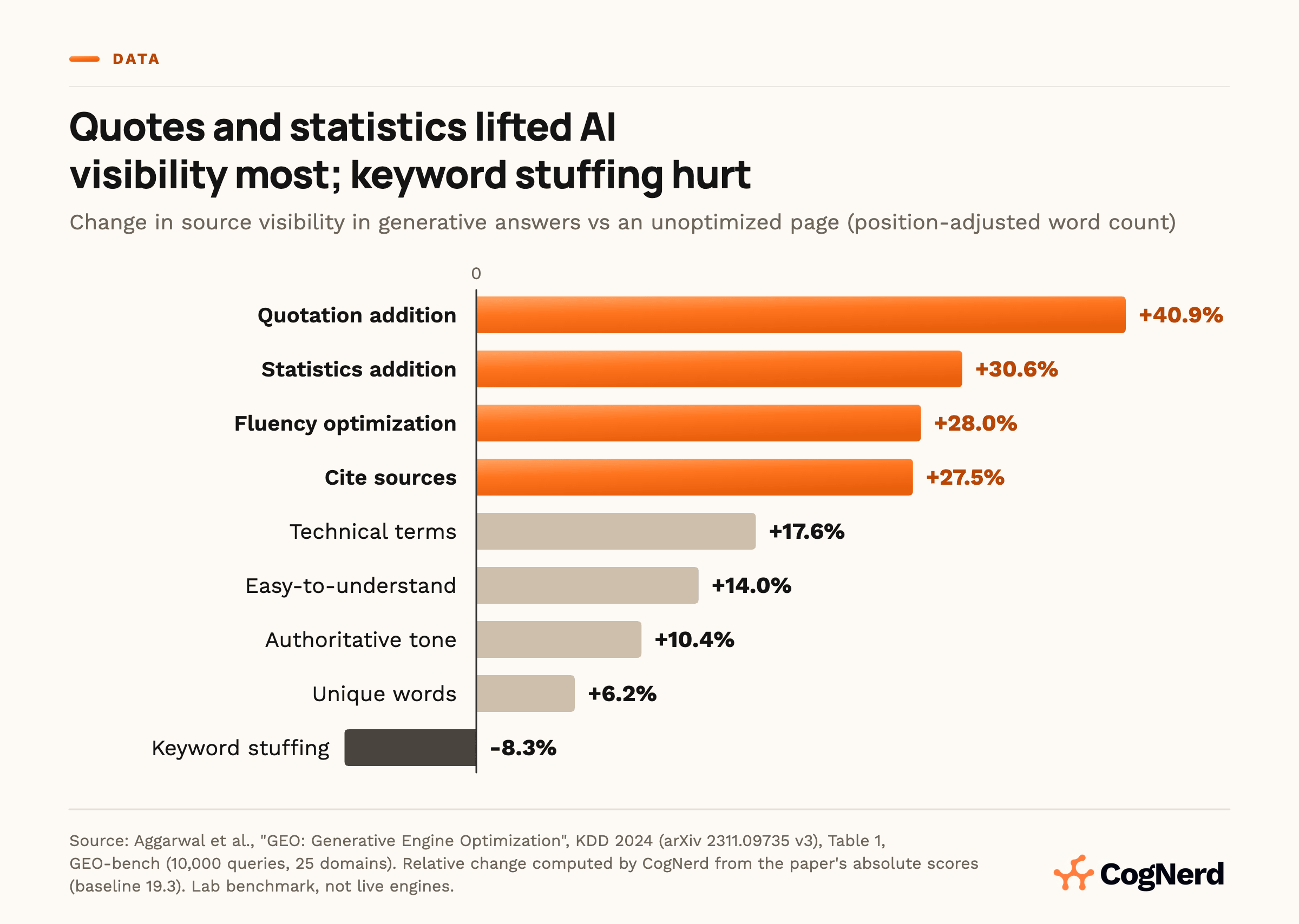
Figure 3. Source: Aggarwal et al., KDD 2024, arXiv 2311.09735 v3, Table 1 (position-adjusted word count). Relative change computed by CogNerd from the paper's absolute scores.
- +40.9% / +30.6% / +27.5% for quotations, statistics and cited sources over the unoptimized page; -8.3% for keyword stuffing.
- +115.1% from citing sources for pages ranked fifth in the search results, while top-ranked pages lost visibility. The authors conclude GEO helps lower-ranked sites most.
Take these as direction, not a forecast: GEO-bench is a lab setup with older engines than today's. The GEO pillar guide turns the method list into page changes.
| Tactic (Aggarwal et al., KDD 2024) Change in AI answer visibility vs an unoptimized page What it looks like on a page |
| Quotation addition | Largest gain (+40.9%) | A short, attributed quote from a named expert or official document |
| Statistics addition | +30.6% | A dated number with its base, linked to the primary source |
| Cite sources | +27.5% | Inline links to the study or document behind each claim |
| Fluency optimization | +28.0% | Plain, well-formed sentences; one idea per paragraph |
| Keyword stuffing | -8.3% | Repeating the query phrase; avoid |
How should brands use generative engine optimization statistics?
Brands should use generative engine optimization statistics as a five-step list: measure unbranded answers, write for long questions, add dated evidence, check what shared platforms say about you, and re-baseline after model changes such as Google's Gemini 4 Hydrogen update to Search on 12 Nov 2026.
- Measure unbranded questions first. They show whether AI answers bring new buyers; branded ones mostly confirm the engine knows your name. In our scans of four brands, unbranded questions named the brand in 1.9% of answers (see our AI visibility audit guide).
- Write for the long question. AI summaries appear on 53% of ten-word searches against 8% of short ones. Use buyer questions as headings and answer each in the first two sentences.
- Add dated numbers, quotes and sources. They were three of the four strongest tactics in the GEO study and the cheapest to add to existing pages. Our guide to content AI models prefer shows the page patterns.
- Fix what shared platforms say about you. Check what Wikipedia, YouTube and Reddit, 15% of AI summary sources in Pew's data, say about your category.
- Re-baseline after model changes. Every figure above came from older models. When an engine swaps its model, as Google did when it brought Gemini 4 Hydrogen to Search on 12 Nov 2026 (Google Search blog), rerun the same question set. Our mid-year AI visibility report tracks earlier shifts.
Is your unbranded number hiding inside a blended score? Our AI visibility score post shows how that happens.
See how often ChatGPT, Gemini and Perplexity name your brand on the questions your buyers ask. Get your free AI visibility audit
About the author. Aman Mundra is Founder & CEO of CogNerd. He spent about ten years as a machine learning engineer, including four years at PayPal, before building CogNerd to measure how brands appear in AI answers.
Last updated: 19 Nov 2026. Figures checked at their sources on that date.
Sources
- Pew Research Center, "Google users are less likely to click on links when an AI summary appears in the results", 22 Jul 2025. https://www.pewresearch.org/short-reads/2025/07/22/google-users-are-less-likely-to-click-on-links-when-an-ai-summary-appears-in-the-results/
- Google, Sundar Pichai, I/O 2026 keynote post, 19 May 2026. https://blog.google/innovation-and-ai/sundar-pichai-io-2026/
- Think with Google, "Google I/O 2025: AI marketing takeaways", May 2025. https://business.google.com/us/think/ai-excellence/google-io-2025-ai-marketing/
- Engadget, OpenAI DevDay 2026 live blog, 29 Sep 2026. https://www.engadget.com/2271985/openai-dev-day-live-blog-chatgpt-news/
- Aggarwal, P. et al., "GEO: Generative Engine Optimization", KDD 2024, arXiv 2311.09735 v3. https://arxiv.org/abs/2311.09735
- Google Search blog, Robby Stein, Gemini 4 Hydrogen in Search, 12 Nov 2026. https://blog.google/products-and-platforms/products/search/gemini-4-hydrogen-search-upgrade/
- Reuters Institute for the Study of Journalism, Felix Simon, Rasmus Kleis Nielsen and Richard Fletcher, "Generative AI and News Report 2026: From standalone tools to information infrastructure", 29 Oct 2026. https://reutersinstitute.politics.ox.ac.uk/generative-ai-and-news-report-2026-standalone-tools-information-infrastructure
- CogNerd app runs ecbf43a5, 10bb9d17, 75426d02, 11f2b9dc (internal; client brands anonymized; one line in this post).
FAQ
Related articles
FAQ
Quick answers on CogNerd, AI search optimization, AEO, GEO and SEO.
See how AI search sees your brand.
Run a free AI visibility scan and see exactly where your brand stands today against your top 3 competitors, engine by engine.
Visibility report
Visibility score
61.4baseline
Engines citing you
2 / 5
Top gap“best {your category} platform”